The Ultimate Investor’s Guide to Safe and Sustainable Property Investment in Bali
Navigating the Indonesian real estate market requires a transition from a speculative mindset to one rooted in strict legal compliance and strategic due diligence. The cornerstone of a secure investment in Bali is an absolute understanding of the island's spatial planning, known as the Rencana Detail Tata Ruang (RDTR), which categorizes land into distinct color-coded zones that dictate development rights. For any investor seeking to operate commercially—such as building hotels, beach clubs, luxury resorts, or restaurants—securing land within the Pink Zone (Tourism Zone) is non-negotiable. This specific designation is the only one that legally permits high-turnover hospitality projects and commercial hospitality activities. Operating in the Yellow Zone (Residential Zone) limits you strictly to residential-style builds like houses or villas and prohibits large-scale commercial hospitality , while the Green Zone (Protected Zone) represents an absolute "no-go" area where all construction is prohibited to preserve Bali’s forests, rice fields, and cultural conservation sites.
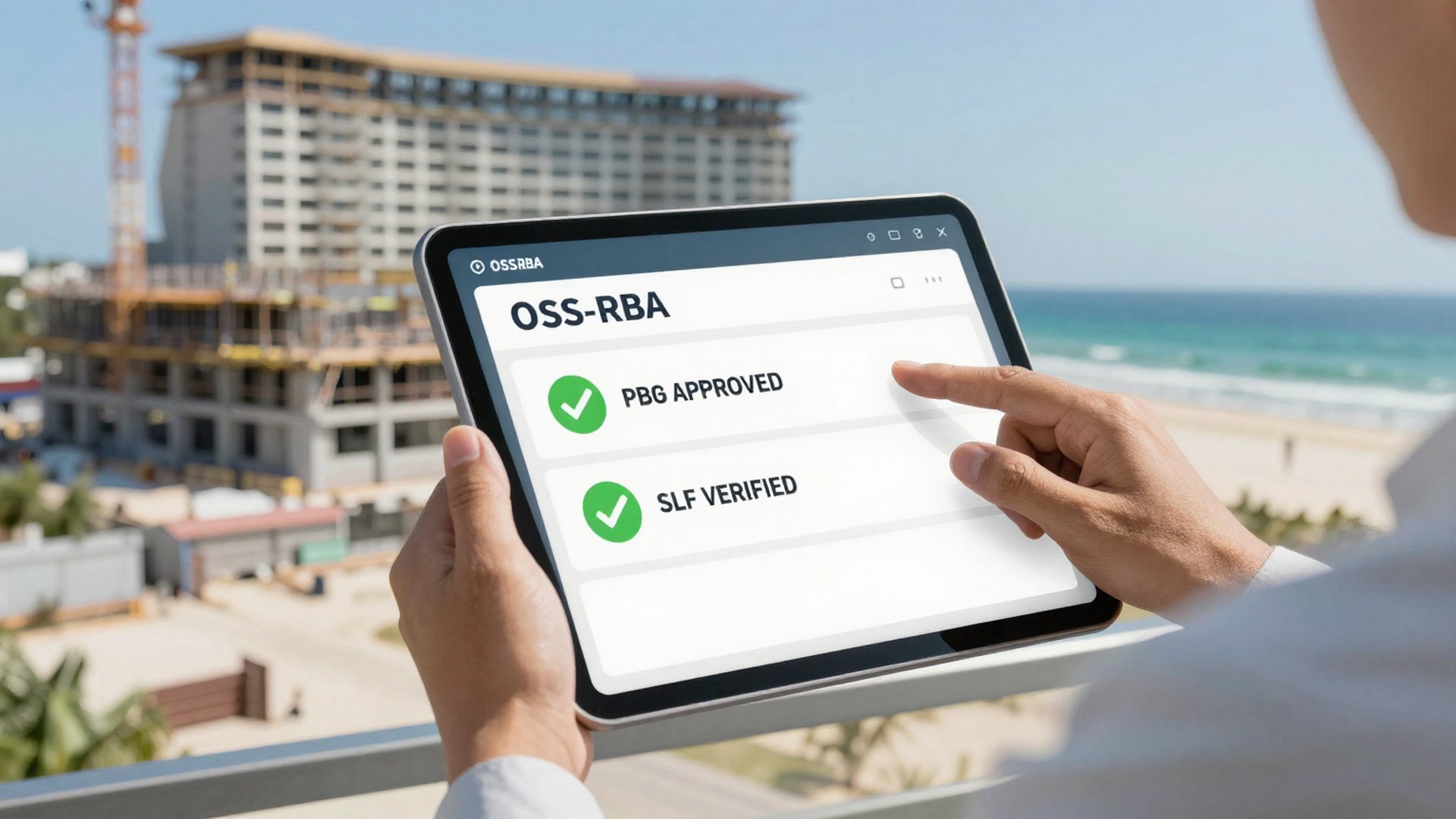
A fatal error many investors make is ignoring the hierarchy of Indonesian agrarian laws, specifically the Undang-Undang No. 5 Tahun 1960 (UUPA), which mandates that all land rights must be formally registered and recognized by the state to be valid. In the modern landscape of 2026, relying on "nominee" structures or informal agreements is a high-risk strategy that offers no legal protection against state audits or ownership disputes. Instead, sophisticated investors utilize a PT PMA (Foreign Investment Company) to hold titles such as Hak Guna Bangunan (HGB) or Hak Pakai (Right to Use), ensuring their assets are verifiable and bankable under the Risk-Based Approach (OSS-RBA) system. This system integrates building approvals, formerly known as IMB, into the current PBG (Building Approval) and SLF (Certificate of Function), which are mandatory for any property listed on international platforms. Without these definitive rights to build and a clear tourism zoning, an asset remains a liability rather than a profitable investment.
Strategic asset selection further mitigates risk by focusing on prime locations with verified infrastructure growth and proven tourist demand. For instance, the Pandawa Beach area has emerged as a premier destination, attracting approximately 50 to 100 buses of tourists daily and benefiting from its proximity to major landmarks like the GWK Statue and five-star resort corridors. Investing in such a "Touristic Surrounded Area" ensures high visibility and consistent traffic for potential developments. By securing a plot with an excellent topography and a Freehold or long-term Leasehold (up to 50 years) title in a verified Pink Zone, you protect your capital from the regulatory "storms" of 2026. Ultimately, safe investment in Bali is not about chasing the highest immediate yield, but about building upon a foundation of total legal transparency, ensuring that your profit is as permanent as your legal standing
#BaliRealEstate2026 #BaliInvestment #PTPMA #InvestInBali #IndonesiaPropertyLaw #BaliVillaInvestment #BaliPropertyAnalysis #IndonesiaRealEstate #BaliBusinessSetup #HakGunaBangunan #BaliROI #UluwatuRealEstate #CangguProperty #BaliLegalAdvice #BaliPropertyMarket #ForeignInvestmentIndonesia #BaliLandForSale #BaliSubway #BaliMRT #SangkaraDewataAsia #BaliZoning #InvestSmartBali #BaliSustainableLiving #BaliSmartHomes #IndonesiaOmnibusLaw #BaliPBG #BaliBusinessLegal #BaliExpatInvestment #BaliLuxuryVillas #BaliInfrastructure2026