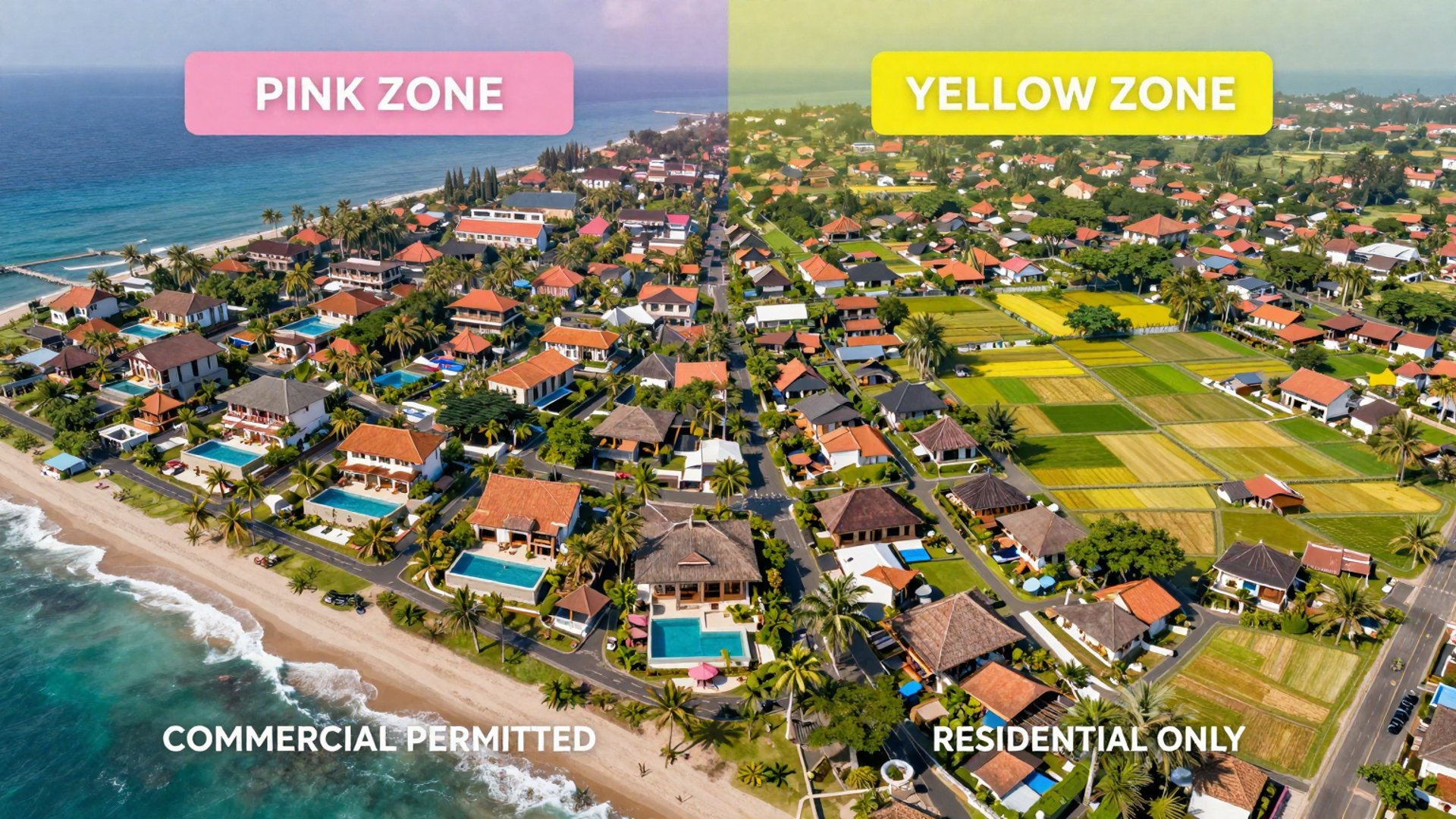
The Illusion of Paradise, Navigating Bali’s Rigorous New Zoning Frontier
The allure of Bali’s real estate market is undeniable, often beginning with a sun-drenched inspection of a limestone cliff in Uluwatu or a verdant expanse of jungle in Ubud. However, for many international investors, the dream of owning a piece of the Island of the Gods quickly transforms into a cautionary tale of bureaucratic displacement.
The physical beauty of a plot is secondary to its digital identity within the ITR (Informasi Tata Ruang), the spatial planning map that dictates the life or death of any construction project. In the current 2025–2026 regulatory landscape, the Indonesian government has implemented a sophisticated "digital trail" for every square meter of land, moving toward a centralized system that leaves no room for the historical "gray areas" of development. The days of breaking ground and negotiating with local officials mid-build are over; today, if your land is classified as a "Green Zone" (Lahan Pertanian Pangan Berkelanjutan), no amount of architectural brilliance or social capital will secure a legal building permit.
The most pervasive and financially devastating myth in the Balinese property market is the promise that zoning classifications are fluid. Sellers and unscrupulous agents often claim that a zoning change is imminent or that a "special arrangement" can shift a plot from agricultural to residential or tourism status. In reality, these zones are increasingly protected by national conservation mandates designed to preserve Bali’s dwindling food security and cultural landscape, making a formal change legally impossible for the average investor.
Relying on an outdated IMB (Izin Mendirikan Bangunan) is another common trap; the transition to the new PBG (Persetujuan Bangunan Gedung) and the accompanying SLF (Sertifikat Laik Fungsi) is now mandatory. Without these updated credentials, a property is effectively a hollow shell—it cannot legally be registered for a Pondok Wisata (Rental License), rendering it useless as an income-generating asset and leaving the owner vulnerable to heavy fines or state-mandated demolition.
True investment security in Bali is no longer found in the soil, but in the verification of permissions. A successful acquisition requires an exhaustive audit of the KKPR (Kesesuaian Kegiatan Pemanfaatan Ruang), which serves as the ultimate confirmation that your intended project aligns with the region's long-term spatial goals. This must be paired with the SLF, which guarantees the building is safe and functionally compliant with Indonesian standards.
Beyond the digital paperwork, one must also navigate the unwritten but essential Banjar Consensus. The local community council holds significant power over access roads, utility connections, and social harmony; ignoring the Banjar is as risky as ignoring the zoning map. In this new era, your real asset is not the infinity pool or the sunrise view, but the stack of verified, digitized documents that prove your paradise is legally sanctioned to exist.
#BaliRealEstate #BaliPropertyInvestment #UluwatuRealEstate #UbudProperty #InvestInBali #BaliVillaInvestment #ITRBali #PBGBali #KKPR #BaliZoningLaws #IndonesiaPropertyLaw #BuildingPermitBali #PropertyDueDiligence #BaliLandForSale #BaliExpatLife #BaliBusinessOwner #PondokWisata #BaliSustainableDevelopment #Bali2026 #BanjarBali