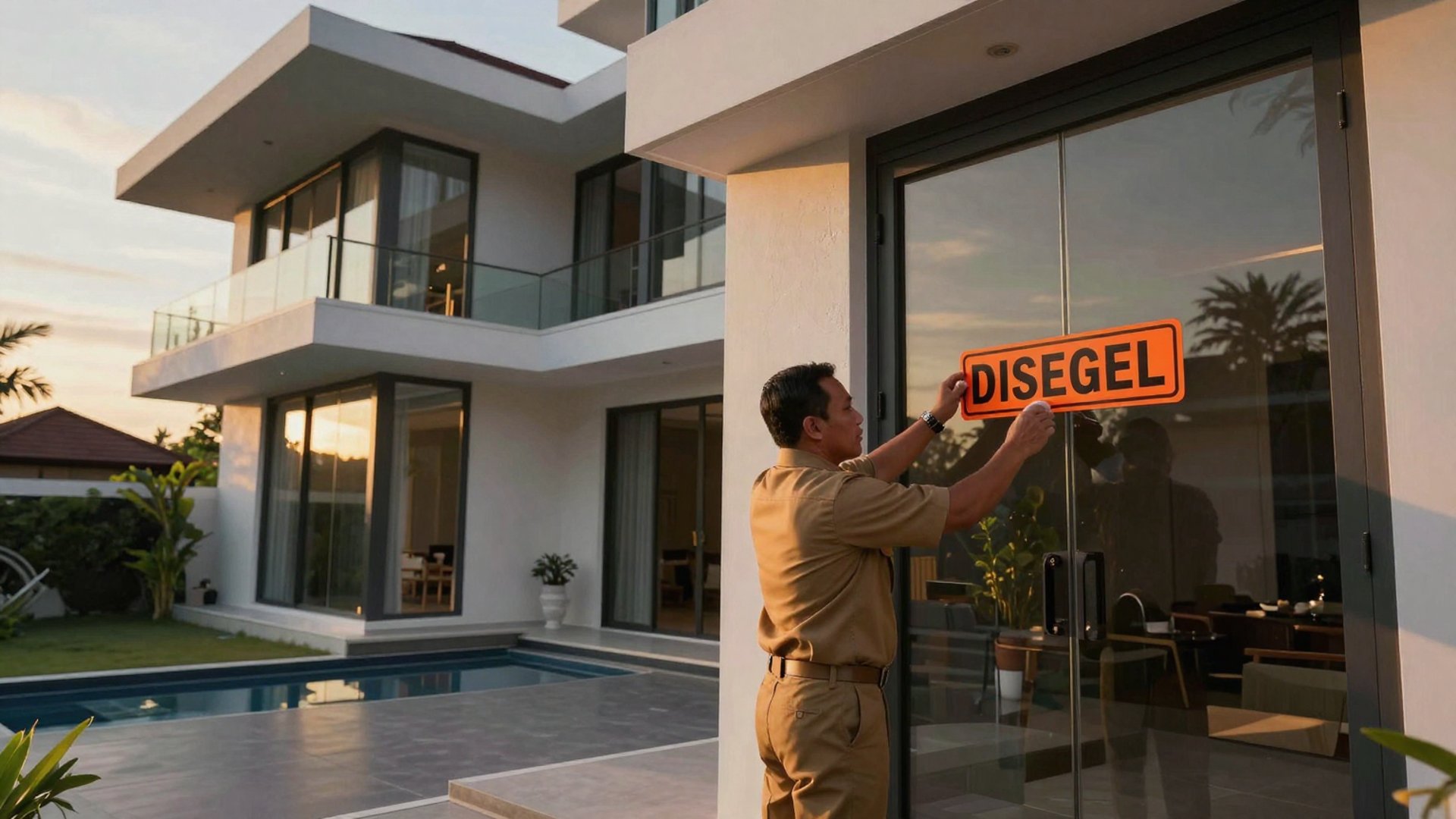
The High Cost of Weak Legal Standing, A Silent Threat to Bali Investments.
Investing in Bali’s real estate market is often painted as a seamless journey toward high returns and tropical serenity, yet beneath the aesthetic appeal of luxury villas and beachfront land lies a complex, multi-layered legal ecosystem that demands absolute precision and foresight. For the international investor, the most significant threat to capital isn’t market volatility, fluctuating occupancy rates, or even global economic shifts; it is the silent, structural erosion caused by weak legal standing. When the legal foundation of an investment is fragile, the "cost" is rarely just a line item on a balance sheet; it involves the potential for the total forfeiture of the asset, exhausting long-term legal battles in an unfamiliar judicial system, and the complete evaporation of the investor’s ability to claim any rights whatsoever.
This fragility often begins with the fallacy of "trust-based" structures, where historically, many investors relied on "Nominee Agreements" or informal handshakes with local entities to bypass foreign ownership restrictions. Under the Indonesian Basic Agrarian Law (UUPA), the person whose name is physically printed on the land certificate is the absolute and final legal owner. In this high-stakes environment, side contracts, irrevocable powers of attorney, and "statement letters" often carry zero weight in a court of law if the underlying arrangement is deemed an attempt to circumvent national land laws, leaving the foreign party with a total lack of control and no legal recourse to recover their funds.
Furthermore, weak legal standing is frequently a byproduct of administrative non-compliance regarding zonation, specifically the ITR (Spatial Planning) and the more recent KKPR (Zoning Approval) requirements. In the delicate landscape of Bali, land is strictly categorized into specific zones—tourism, residential, or agricultural (Green Zone)—and these boundaries are increasingly enforced with modern technology.
A luxury villa built on land designated for agriculture, for instance, fundamentally lacks a valid Building Approval (PBG) and a Certificate of Function (SLF). Without these, the property is essentially a ghost in the system; it cannot be legally insured, it cannot obtain a valid rental license (Pondok Wisata), and it remains under a permanent threat of demolition or forced closure by local authorities.
This vulnerability has been significantly sharpened by the Indonesian government’s aggressive shift toward "Digital Transparency" through the OSS (Online Single Submission) system. This centralized, digital infrastructure has eliminated the "grey areas" where investors once hid, making inconsistencies in tax reporting, land usage, and immigration status (KITAS) instantly visible to government auditors.
Investors operating without the protection of a PT PMA (Foreign Investment Company) find themselves in a precarious position where they cannot legally defend their commercial interests because, in the eyes of the law, they are technically "doing business" illegally, which can lead to deportation alongside the loss of the asset.
Beyond the physical land and buildings, legal standing must also encompass the operational and intellectual integrity of the business. Many investors pour millions into construction but fail to secure HAKI (Intellectual Property) for their villa brands or fail to obtain the necessary operational permits required for high-end hospitality.
Without a solid, foreign-owned legal entity, an investor is paralyzed: they cannot open transparent corporate bank accounts to manage global revenue, they cannot legally employ a local workforce—which leads to high-risk labor disputes—and they cannot sign enforceable contracts with the very vendors, marketing agencies, or management companies they rely on to generate a profit. This lack of standing eventually leads to the "Inheritance and Exit Trap," perhaps the most devastating cost of a weak legal setup.
If an asset is held through a nominee or an improper lease structure, it cannot be legally transferred to heirs or family members. In the event of an investor’s passing, the asset often reverts entirely to the nominee or enters a "legal vacuum" where the family has no standing to claim the investment. Similarly, when attempting to exit the market, a "dirty" legal history significantly devalues the property, as institutional buyers and sophisticated funds will only pay a premium for "clean" assets with bulletproof documentation.
Ultimately, in the Bali property market, legal standing is the filter through which all future value flows; true investment security is found not in the temporary height of the ROI, but in the permanent strength of the titles, the clarity of the corporate structure, and an uncompromising compliance with Indonesian Law. For the serious investor, the cost of securing a strong legal standing is a necessary one-time expense, whereas the cost of a weak one can ultimately be everything they have built.